
Coria del Río / Caura
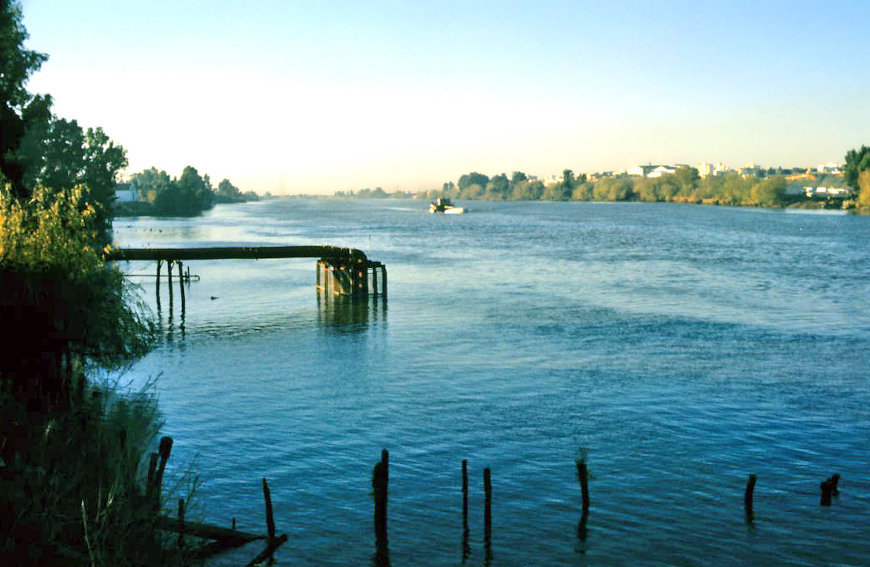
The town of Coria del Río is situated on the banks of the Guadalquivir River (known as the Tartessos in ancient times) 12km south of the major city Seville in an area where three different Spanish regions meet to create a richly diverse natural ecosystem.
It was in this prime location that an important Phoenician settlement, port and religious sanctuary was established and flourished between the eighth and sixth centuries BC, the remains of which continue to be unearthed, including a temple discovered during construction work in 2019.
Named Caura by the Romans, the settlement was strategically positioned at the mouth of the navigable and vital Tartessos River, allowing it to control trade between the Mediterranean and the interior of southern Spain, then dominated by the elusive Tartessian civilisation, ruled for 80 or 120 years by King Arganthonius (the ‘Silver King’) according to the ancient sources, suggesting a succession of kings bearing the same name.
In 1997, a well-preserved and unique Phoenician altar was discovered on a small riverside elevation in Coria del Río known as the San Juan Hill, belonging to the temple whose existence was confirmed by the 2019 excavations.
The freestanding altar was built in the form of a bull’s hide and probably used during animal sacrifices to the main Phoenician god Baal and his consort Astarte, protectors of sailors and merchants, and symbolically identified with the bull and the cow.
This is suggested both by the shape of the altar and its solar alignment corresponding to the June solstice, a three-day festival dedicated to Baal in ancient times, and to the setting of Venus, a planet named after the Roman goddess closely related to Astarte.
The discovery of the temple complex with its walls and outbuildings surrounding the altar room ranks Coria del Rio alongside El Carambolo as the most important Phoenician religious structures so far discovered in Spain, but the connection between the two sites that dominated the mouth of the Tartessos River awaits a definitive explanation.
Other typically Phoenician religious artefacts found at the site include painted ostrich eggs, incense burners, ceramic plates and jugs, and scarab rings, confirming that ancient Caura was not only commercially important, but also a sacred site whose rituals would have drawn a wide audience of settlers and locals, facilitating cultural interaction and exchange.