.jpg)
The Tomb of the Warrior
The recently excavated Tomb of the Warrior and its sixth-century BC grave goods represent a unique, enigmatic testament to the Phoenician presence in southern Spain. Currently displayed at the Málaga Museum, the tomb was unearthed in 2012 during excavations in the centre of the modern-day city, located just outside the walls of ancient Phoenician Malaka.
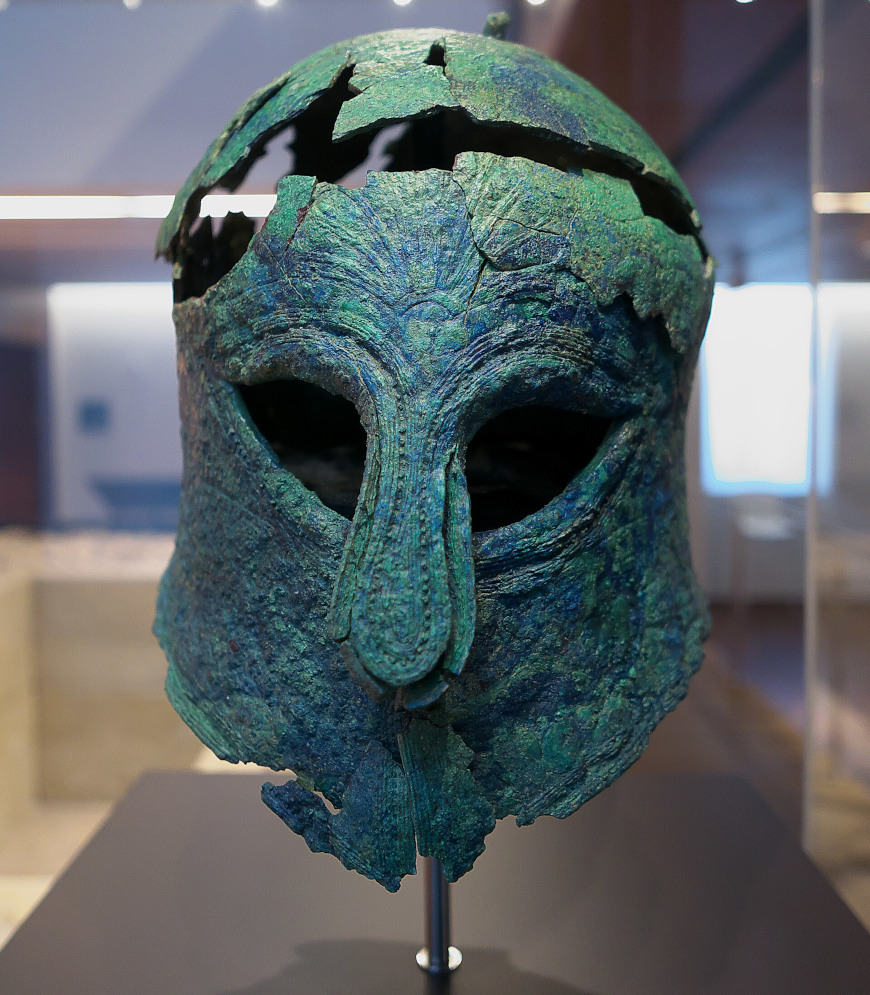
The elaborate construction of the burial chamber and its valuable contents - particularly a magnificent bronze Corinthian helmet - indicate that the deceased was a distinguished military figure of high social standing. He was very likely a Greek hoplite mercenary leader fighting on behalf of the Phoenicians, who frequently relied on foreign elite forces to safeguard their lucrative commercial interests.
The tomb was discovered undamaged and unlooted. Its burial chamber was built in an excavated pit, using finely worked sandstone blocks to line the floor and sides beneath a presumed wooden roof. The human remains belonged to a tall, robust male aged around 40, who bore obvious but healed injuries to his head and shoulder - trauma almost certainly sustained in battle.
A Greek bronze helmet, fragments of a bronze shield, and an iron spearhead found in the tomb point directly to the deceased’s occupation. Meanwhile, other grave goods reveal a distinct Phoenician influence. These include a beautifully preserved gold-and-silver Egyptian scarab ring, a ceramic perfume burner (thymiaterion), and a silver plate decorated with an eight-petal floral motif placed next to the skull.
This combination of Greek and Phoenician elements raises profound questions about relations between the established Phoenician population in southern Spain and the Greek cities spreading rapidly across the Mediterranean. At a time of intense geopolitical transition, these two maritime cultures may have lived alongside each other, resulting in an extended period of cultural amalgamation and integration.