About Cerro del Villar
Founded around 760 BC, Cerro del Villar was one of the most important Phoenician settlements in the western Mediterranean. It thrived for almost 200 years before being peacefully abandoned, when the population likely moved four kilometres west to Malaka (modern-day Malaga).
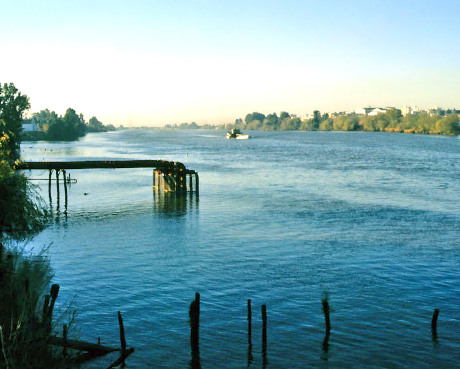
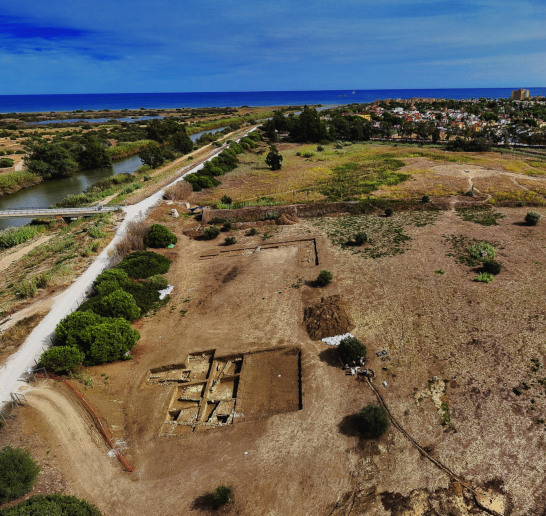
Originally located on a small island just five metres above sea level, Cerro del Villar was vulnerable to flooding due to marshy conditions and deforestation. However, its position at the mouth of the Guadalhorce River - the largest river in Malaga province - was highly strategic. Boasting one of the best harbours on the coast, the settlement controlled lucrative trade between the Mediterranean and the fertile interior of southern Spain.
The prosperity of Cerro del Villar is evident from its expansion to cover the entire island. Furthermore, its complete lack of fortifications suggests peaceful relations with the local population, establishing the settlement as a neutral market space for traders and cultural exchange.
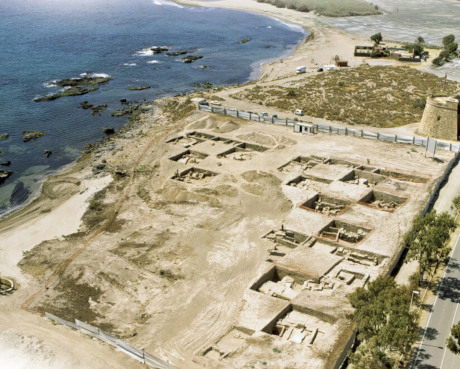
The Cerro del Villar archaeological site was first excavated in 1966. Subsequent work starting in 1986, led by the esteemed María Eugenia Aubet and continuing today under José Suárez Padilla, confirmed that this Phoenician settlement was the primary economic hub of Spain’s southern coast nearly 3,000 years ago.
The Guadalhorce waterway granted the Phoenician settlers direct access to the rich agricultural resources and indigenous communities of the fertile valley. Simultaneously, the settlement’s port facilities accommodated the cargo of both large maritime ships and smaller river craft.
Beyond river trade, Cerro del Villar offered a vital overland route to the mineral-rich heartland of Tartessos. It also served as one of the last safe harbours before sailors faced the challenging crossing of the Strait of Gibraltar - historically known as the Pillars of Hercules - en route to Cádiz.
Although only a small portion of the site has been excavated, clear signs of its sophisticated urban layout have emerged. Discoveries include large brick residences surrounded by a network of streets, covered walkways, and open spaces. Some of these luxurious dwellings rose at least two storeys high, featuring six or more rooms arranged around an interior courtyard with direct access to the sea via private jetties.
Evidence of Cerro del Villar’s thriving economy comes from the site’s marketplace, port infrastructure, and industrial zone. The settlement served as the regional centre for commercial, wheel-made pottery production - particularly tableware. This advanced ceramic style represented a revolutionary upgrade over local handmade pottery and was highly prized by indigenous communities.
Beyond ceramics manufacturing, the site's industrial quarter included workshops for processing iron, bronze, copper, lead, and silver. It also housed facilities for the production of coloured textiles; notably, excavators discovered large quantities of Murex shells inside one building, confirming the local manufacture of Tyrian purple dye. Cerro del Villar’s prominent role in Mediterranean trade is further evidenced by the Greek and Etruscan pottery found at the site, alongside imports from its North African Phoenician sister settlement, Carthage.
Another major advantage of Cerro del Villar was its fertile river valley, featuring 18 km² of land remarkably well suited to intensive, high-yield agriculture. Local farmers grew wheat, barley, oats, lentils, grapes, and peaches. The sheer number of stone mills discovered for grinding grain indicates that the small Phoenician population produced a significant surplus for export.
While wine was imported from the eastern Mediterranean during Cerro del Villar’s early days, vineyards soon sprang up around the settlement. Excavators discovered ceramic transport and storage amphorae containing grape residue within the industrial zone. This evidence suggests that the introduction of wine - previously unknown to the region - proved highly popular with local indigenous customers.
Abundant remains of cattle, sheep, and goats - alongside specialized equipment like hooks, lead weights, and harpoons - demonstrate that the inhabitants practiced both livestock husbandry and commercial fishing. Furthermore, finding meat and tuna remnants inside amphorae points to preserved foods as a major export. This includes early forms of fermented fish sauce (garum), which was likely produced in large quantities soon after the settlement's foundation.
The exact location of Cerro del Villar’s main necropolis remains disputed. While Cortijo de San Isidro in La Rebanadilla is nearby, its late ninth-century BC burials suggest it was used before the main settlement was even founded. Alternatively, a number of Phoenician alabaster urns containing cremated remains have been discovered in shaft tombs at the nearby Cortijo de Montañez. However, despite these close burial clusters, no primary necropolis reflecting the true scale, duration, and social diversity of Cerro del Villar has ever been found.
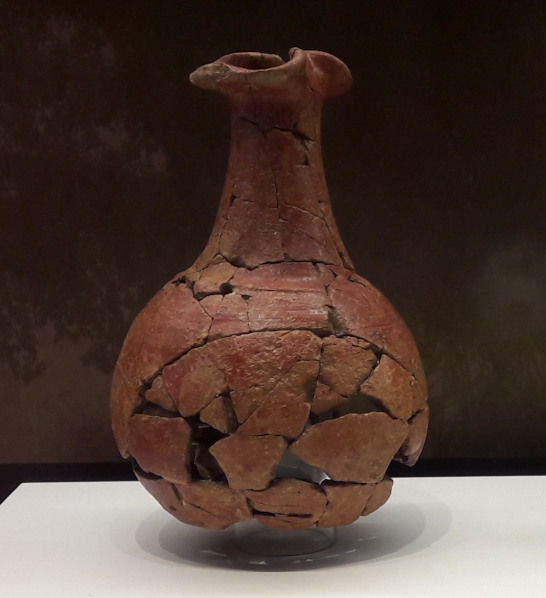
Phoenician Red Slip Ware
Phoenician "red slip" refers to a coating of red clay applied to a vessel’s golden-hued surface and then meticulously polished. Originally produced in the Phoenician homeland and later across western Mediterranean settlements, red slip ware became a major status symbol. Its high sheen and reddish-brown finish were intentionally crafted to resemble luxury bronze vessels.
Beyond plates, bowls, and saucers, common Phoenician tableware included "mushroom-mouth" jugs with wide rims and "trefoil-mouth" pitchers featuring a three-spouted rim shaped like flower petals. Both vessel types were utilized in domestic settings, funerary rituals, and celebratory feasts. During crowded gatherings, the distinctive trefoil design allowed a host to cleanly cut off the flow of liquid from any angle without dripping, ensuring the precise and controlled pouring of wine.
The presence of red slip tableware serves as a primary archaeological footprint of Phoenician trade and settlement across the Mediterranean. Furthermore, the evolving width of red slip plate rims has been crucial in allowing archaeologists to establish a precise timeline for the early Phoenician presence in southern Spain.
Address
Opening Hours
Tues-Sat: 9am–9pm
Sun & holidays: 9am–3pm
Mon: Closed
Free admission for EU citizens and Spanish residents. Other visitors: €1.50.
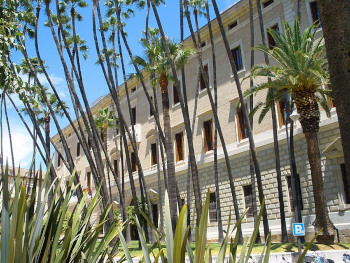
The Museum of Malaga is located in the Palacio de la Aduana (Customs Palace) next to the hill of the Alcazaba in the centre of the city. The imposing neoclassical building was built in 1791 and became Malaga’s main museum in 1973, before undergoing refurbishment from 2008 until its reopening in 2016.
The museum brings together the collections of the former Provincial Museum of Fine Arts and the Provincial Archaeological Museum, and is divided into two sections, with more than 2,000 fine arts pieces and 15,000 in the archaeology collection making it the largest museum in Andalucia and the fifth largest in Spain.
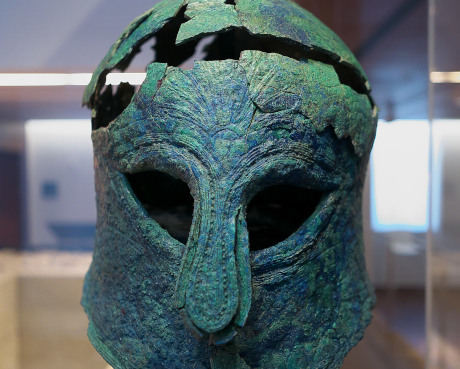
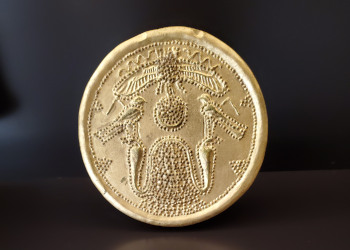
One room is dedicated to the discoveries made since 1964 at the Phoenician sites of Toscanos, Trayamar, Morro de Mezquitilla, Jardín and Chorreras by the German Archaeological Institute. Highlights include the Trayamar Medallion (pictured), a shaft tomb from Chorreras, artefacts from Cerro del Villar, and the mysterious ‘Tomb of the Warrior’.